How to use your autumn leaves

Autumn leaves

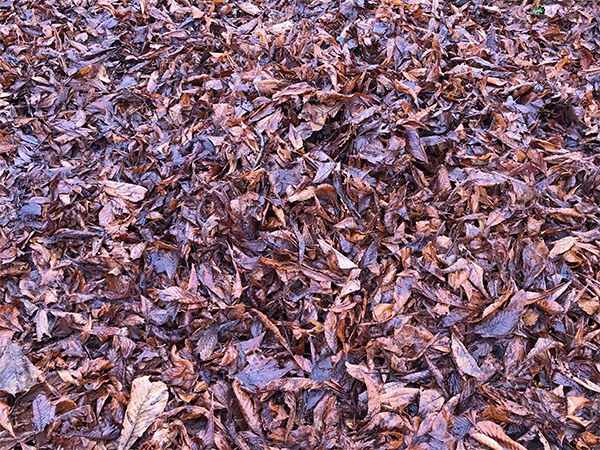
With all the wet and windy weather we’ve been having lately, the autumn leaves have been falling thick and fast, gathering in slick clumps on my patio, lawn and borders. It’s tempting to leave them be. After all, it’s the natural cycle of things, right? But there are good reasons to rake them up and recycle them in a different way.

First, they definitely need sweeping up from any hard landscaping, like paths or patios, mostly to prevent them from becoming slippy and dangerous, but also to stop them from blocking drains, which can cause flooding.

But what about the leaves on your lawn and borders?

Reasons to get raking

Too many leaves in one place will:

  • block sunlight and air from getting to your plants
  • trap moisture, enabling mould or disease to develop and/or causing the plants underneath to rot.

So, I rake them up and turn them into my own (free) soil improver that I can use when and where I want.

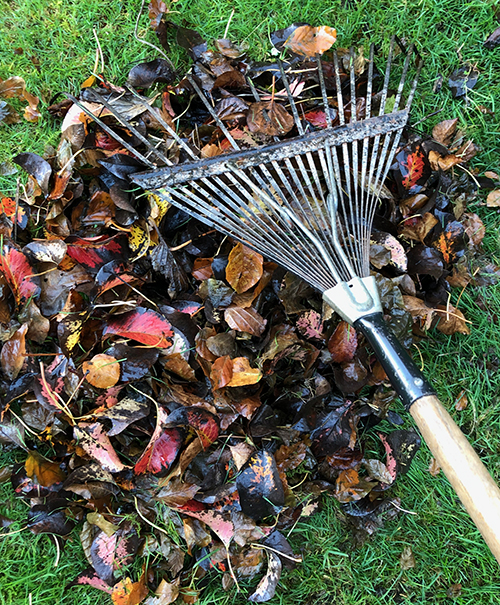
I’m not a big fan of leaf blowers. They’re noisy and use fuel. But fair enough if you’ve got a huge area and lots of leaves to clear. Given the size of my garden, my tool of choice is a sprung flat-tined garden rake. It does the job quietly and efficiently, plus raking is a fabulous way of burning calories. If I’m feeling a bit chilly, 5 minutes of raking is guaranteed to warm me up!
Raking leaves
A sprung flat-tined garden rake is my tool of choice

Composting

Most of the leaves that I collect end up in the compost bin. They are a terrific source of ‘brown material’ for the bin. If you don’t know what I mean by this, have a read of my blog post on Compost composition to get the the right ratio of ‘greens’ to ‘browns’.

Add leaves to your compost heap
Leaves are a great type of ‘brown’ material to add to your compost heap

Making leaf mulch

Another option is to make leaf mulch, which is really easy.

  1. Place the leaves in a black plastic bag.
  2. Give them a good soak (if not already wet).
  3. Puncture the bottom of the bag with a few holes for drainage.
  4. Tie the bag up and leave in a hidden corner of the garden.

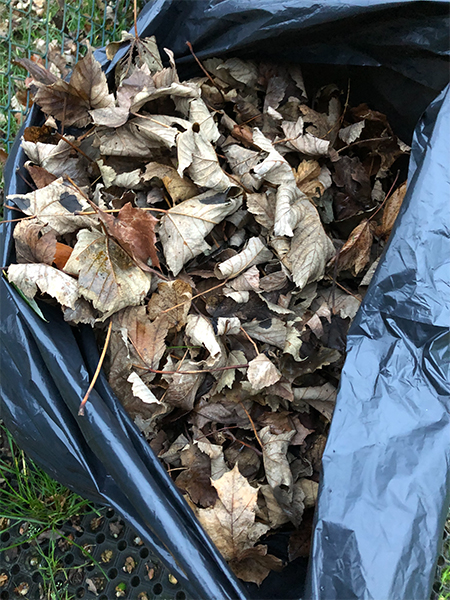
The leaves will rot down into a nutritious mulch, ready for use in your borders next spring. IMPORTANT NOTE: make sure the leaves are wet before sequestering them away. I made the mistake of bagging up dry leaves the first time I tried this and nothing happened!
Dry leaves don't break down
Don’t bag up dry leaves – nothing will happen!!

The leaves are likely to break down quicker if you chop them up into smaller pieces before bagging them. You can do this by running a mower over them first, but only do this if they are dry or they will clog up your mower!

Wildlife-friendly leaf piles

Finally, leaf piles are fabulous for attracting wildlife to your garden. They provide shelter for all sorts of animals, such as small mammals, frogs and insects, and provide a good site or materials for hibernating hedgehogs. They are also a great source of food for birds, which will flick the leaves everywhere in search of grubs and insects.

Rake the leaves into a sheltered, quiet area of the garden, so that the leaves stay dry and don’t blow around everywhere, and you won’t disturb the residents.

Happy raking!
Where do bumblebees go during winter?

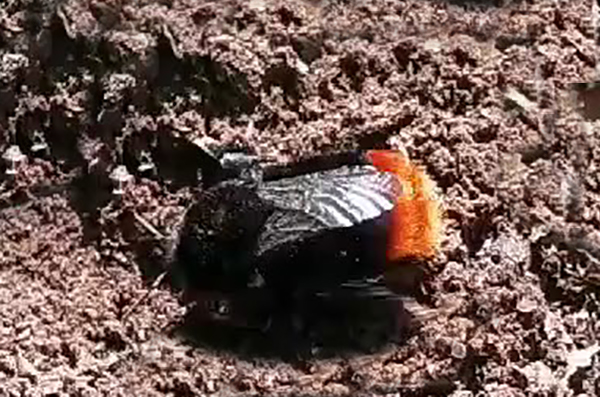
This week, in a rare rain-free 15 minutes in the garden, I unearthed a couple of red-tailed bumblebees (Bombus lapidarius) from an old wooden trough that had gone rotten. They appeared to have been completely submerged in the soil among the roots of a woody lavender, and they were not at all happy about being disturbed.

Red-tailed bumblebee (Bombus lapidarius)
One red-tailed bumblebee (Bombus lapidarius), rudely disturbed from its winter hibernation

There was a lot of frantic buzzing and stumbling around as they shook off the soil and tried to get their bearings from what, presumably, had been the start of a long, sleepy hibernation. It got me thinking…where do all the bumblebees go at this time of year?

Bumblebee life cycle

A quick session with Mr Google brought me up to speed on the life cycle of bumblebees, which starts with the emergence of a queen bee in spring. She establishes a nest and lays about a dozen eggs that hatch into sterile female worker bees. Some of the workers guard or clean the nest, while others forage for pollen and nectar to feed further broods of workers through late spring and early summer.

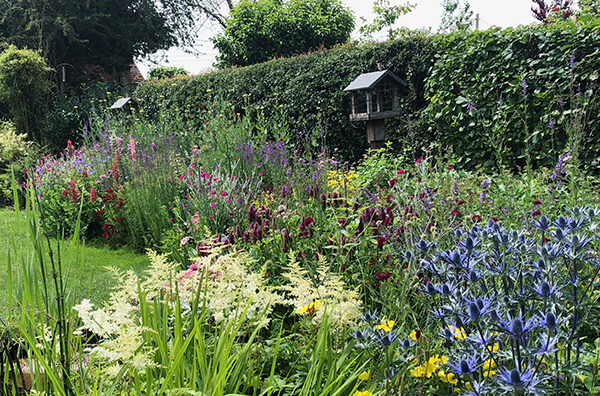
I’ve made a concerted effort in recent years to only introduce pollinator-friendly plants to the garden, so during the summer my borders are buzzing with worker bees.

A summer smorgasbord of pollinator-friendly plants

In late summer, the queen starts to produce fertile females (next year’s queen bees) and males, which leave the nest. The males mate with new queens from other nests. They die before the start of winter, as do the worker bees and original queen bee.

The newly mated queens then find a cool, quiet place to hibernate, where they will use reserves of energy stored as fat in the body to see them through the winter. Typically, they burrow into soft soil in North-facing banks, or find shelter under logs or stones, to avoid being warmed up by the winter sun.

Winter-flying bumblebees

Any increase in temperature could bring the queens out of hibernation. With our seasons getting more confused (I’ve already spotted some daffodils emerging!) and our winters getting warmer, we are likely to see more and more queen bees out and about during the winter months. In fact, in milder southern counties of the UK, some queen bumblebees, particularly the buff-tailed species (Bombus terrestris), don’t hibernate at all. Instead, they choose to start a new nest early, particularly in areas where there is a rich supply of pollen and nectar from winter-flowering plants.

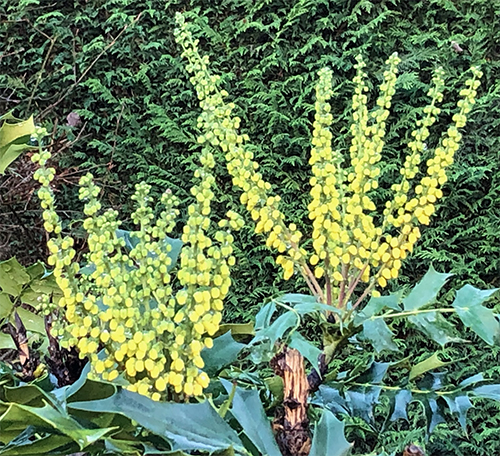
Mahonia in bud: a rich supply of nectar through the winter months

I often see bees on my Mahonia in December and January. It’s a wonderful winter-flowering plant that blooms through several of the coldest months. Other good sources of bee food during the winter include winter-flowering heathers, evergreen clematis (Clematis cirrhosa) and the winter honeysuckle (Lonicera fragrantissima).

What to do if you find a hibernating bumblebee

If you unearth a hibernating queen bee by mistake and she isn’t very active, the Bumblebee Conservation Trust recommends covering her up again (loosely, so that she can get out!). Otherwise, place her in a sheltered place so that she can rest before finding a new hibernation site.

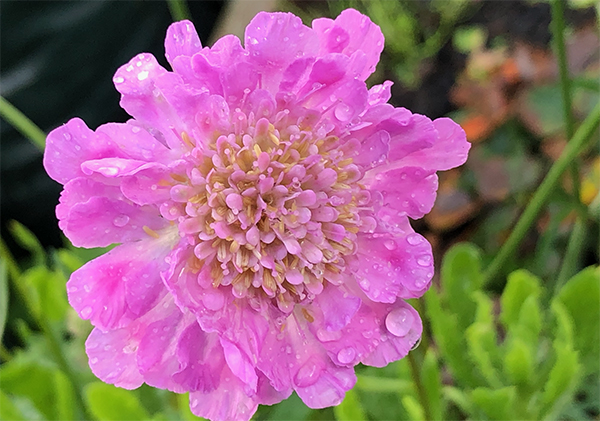
As for my two angry bees, I couldn’t return them to their original site (as I had demolished it), and they were way too active anyway, so I gently transferred them onto a late-flowering scabious where they could feed and rest before finding a new spot in which to see out the winter.

This rain- and wind-battered Scabious is still going strong in November!
This rain- and wind-battered scabious is still going strong in November!

Bee happy

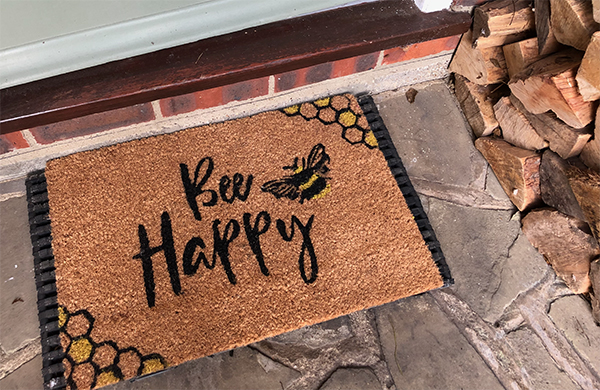
Although I’m sure to see one or two bumblebees over the next few months, I will miss the sound of buzzing in the garden and look forward to the return of the workers in spring. Until then, I will have to make do with my new doormat, which makes me smile every time I come into the house. Trouble is, it’s way too pretty to wipe my feet on it!

New front doormat keeps me smiling...Bee Happy!
My new front doormat makes me smile…Bee Happy!