2022 End of year review

The weather in the UK is always unpredictable – that’s why talking about it is a national pastime – but this year it has given us gardeners a rollercoaster of issues to contend with. My village in the South of England made the news twice in 2022 with some of the driest and wettest days on record.

January

It started with the warmest New Year’s Day since records began, with warm air from the Azores raising temperatures to a high of 16.3oC in central London. It was also the sunniest January on record in England, with the Met Office recording 80.7 hours of sunshine.

As we all (should) know by now, this general increase in temperature is concerning, but on the plus side it meant that my snowdrops, aconites and crocuses were all in bloom by the end of the month.

February

February was mild too, but brought a cluster of three named storms – Dudley, Eunice and Franklin – which wreaked havoc across the UK. Storm Eunice had the biggest impact in the south of England, bringing down trees, greenhouses and fences, and leaving lots of homes without power.

It brought down part of the conifer hedge that runs the length of my garden, as well as most of the mistletoe in the local cemetery. A lot of the lovely cherry blossom that had started to emerge didn’t hang around for long either, unable to to withstand the gusty weather.

March

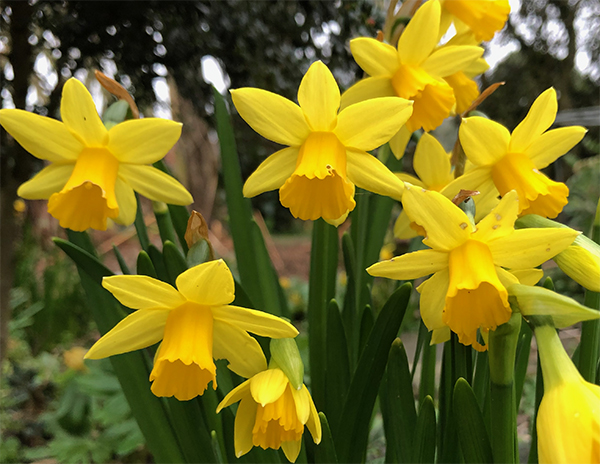
In early March, landmarks across the world were illuminated in yellow and blue to reflect our solidarity with the people of Ukraine who were, and still are, in an unimaginable situation. Ablaze with daffodils and irises, the garden seemed to echo this sentiment.
After all the wind and rain, I managed to start a Spring tidy up, revealing a colourful collection of hellebores.

April

The borders slowly started to take shape this month, but it was an ongoing battle between me and the weeds, particularly with ground elder. I will keep digging it out, and eventually I will be victorious!

By the end of the month, the garden was looking pretty good, with tulips taking centre stage.

May

First broods of robins and blue tits both fledged successfully this month, we started to see evidence of hedgehogs, and we were visited by a host of butterflies and bees enjoying the pollinator-friendly planting.

I continued to do battle with the weeds though.

The sowing and growing continued.

Meanwhile, the shrubbery at the bottom of the garden started to get leafy and lush (there’s a husband in there somewhere!).

June

I managed to get most of the plants that I had grown from seed, plug plants or cuttings planted out this month.

With longer days and warmer evenings we started to sit outside later into the evening, enjoying some al fresco meals, so I gave the ‘dining area’ a bit of a makeover, and added some new lights.

It was a month of celebration, with an extra bank holiday and street parties to celebrate the Queen’s Platinum Jubilee.

July

The warm dry spell became a hot dry spell, and we were soon making headlines as the driest village in Britain, with no rainfall at all in July.

The garden was at its flowering peak, and watering became a full-time occupation.

August

As temperatures continued to soar, parts of southern, central and Eastern England officially moved to drought status, and hosepipe bans were introduced in some regions. The watering marathon continued.

On the up side, I started to harvest my tomatoes 4–6 weeks earlier than usual, and began enjoying meals of home-grown deliciousness.

There were also plenty of early, albeit smaller than usual, blackberries to forage in the hedgerows.

September

This month was a sombre one, with the passing of Her Majesty Queen Elizabeth II. A constant in so many of our lives, it hit a lot of us harder than we thought it would, and the nation went into an extended period of respectful mourning.

Life in the garden went on though, with some of my favourite plants starting to go to seed, ready for collection.

October

The hot dry weather had taken its toll on some of the shrubs and hedges. We’d been talking about it all year, and finally decided to remove the stressed and straggly conifer hedge bordering our neighbours’ garden, leaving us with some exciting planning for that area in 2023.

I harvested the last of the summer vegetables (peppers, chillis and aubergines), and picked the last of the tomatoes – red and green – to make chutneys and soups.

And the first frost arrived.

November

In November, we made the news again; this time, as the wettest village in Britain with the most rainfall in England falling in one night.

With some decent rainfall, many of the perennials that had struggled during the hot summer had a second flush of flowers.

But the lawn and borders soon became sodden, and mushrooms flourished.

December

December ended a long run of above-average temperatures, with a prolonged period of freezing conditions.

Even the cobwebs froze and, on several days, we experienced a beautiful hoar frost (crystalline deposits of water vapour).

The Met Office has confirmed that 2022 has been the warmest year in the UK since records began, with every month except December being warmer than average. As gardeners we are the first to see how earlier springs, warmer summers and extreme weather events are affecting plants and wildlife, and there is no doubt that we will have to adapt how we garden in the future.

For now, let’s watch this space and keep talking about what we can each do at a garden level.

All that remains of 2022 is for me to wish you all a very Happy New Year!

#15greenmins

A poinsettia is not just for Christmas

There’s a good chance you’ve bought a poinsettia for Christmas, either for yourself as a must-have addition to your Yuletide decorating, or for a friend or family member as a gift to brighten their day. Florists, garden centres and supermarkets are full of them in the run up to Christmas, and most of us can’t resist buying one.

Poinsettias are the perfect addition to Christmas decorations

Unfortunately, they have a bit of a reputation of being hard to care for – I have a friend who is delighted if hers lasts a week!

But follow 3 simple rules and your poinsettia should thrive through Christmas, and beyond.

  1. Keep it warm and out of draughts
  2. Give it bright light (but not direct sunlight)
  3. Keep the soil moist, but don’t overwater it!

What is a poinsettia?

The poinsettia (Euphorbia pulcherrima) is a member of the spurge family. It is native to Mexico and parts of central America, where it grows as a perennial shrub, reaching heights of 10–12 feet. Cuttings from the native plant were sent to the USA in 1828 by the first US Ambassador to Mexico, physician and botanist Joel Roberts Poinsett, and they have been widely cultivated across the globe ever since.

Poinsettias grown as shrubs or trees in their native Mexico
Poinsettias grow as shrubs or trees in Mexico

Poinsettias have small yellow flowers at the centre of showy coloured bracts (leaves). There are now over 100 cultivated varieties with various coloured bracts, including white, pink and marbled, but the red poinsettia remains the most popular choice in the UK at Christmas.

Poinsettia care: 3 top tips

Keep it warm and out of draughts. Poinsettias like a constant warm temperature of 15–22oC. Many shops put the plants near their doorways to tempt you to buy them on the way in or out, but this is the worst possible place for them in the UK, because fluctuations in temperature below 12oC (i.e. every time the door opens) will stress the plant; as a result, it will start to drop its leaves. This may well be the reason why so many plants struggle once you have brought them home, as they’ve already been stressed in the shop.

At home, you can put your plant near a radiator but make sure you keep it away from draughty areas like doorways, open windows and fireplaces.

Poinsettias also prefer humid conditions, so if you are keeping your plant in a very warm place, it is a good idea to mist it with water from time to time.

Give it bright but indirect light. Poinsettias prefer light to shady conditions, but direct sunlight can scorch the leaves. This shouldn’t be a problem in winter, but don’t put the plant on a south-facing windowsill in summer.

Where to place a poinsettia
This poinsettia did well in a south-facing position in my conservatory, but had to be moved later in the year away from direct sunlight

Keep the soil moist but not overwatered. Poinsettias do not like a lot of water. Try not to let the root ball dry out completely, but it is even worse to leave the plant sitting in water. If you do, the roots will rot and you’ll end up with a dead plant.

A wilting poinsettia is a sign of a draughty location or too much or too little water

If you’re not sure how much water to give your plant, I’d lean towards it being too dry. It seems to work for me. I wait until the top layer of soil has dried out before giving it a small amount of water, making sure that there is no excess water at the bottom of the pot.

Check the leaves regularly – if they are starting to curl or wilt, or they are dropping off, then you will need to adjust your watering regimen.

I’ve read that poinsettias prefer ‘soft’, warm water, but mine gets water out of the tap (which is both hard and cold), and it hasn’t seemed to do it any harm.

Poinsettia care after Christmas

Sadly, once poinsettias start to lose their colour towards the end of January, most are resigned to the rubbish or compost bin.

They don’t have to be thrown away though. They make a lovely house plant for the rest of the year and, with a bit of special attention, can be coaxed into turning red again in time for next Christmas.

My poinsettia from Christmas 2021

Here are a few tips to help your poinsettia thrive.

  • Continue providing it with appropriate warmth, light and water (as above).
  • In spring (April), reshape the plant by cutting the stems back to 4–6 inches; be careful to avoid the milky sap that will ooze from the cut stems, as it can cause skin irritation.
  • When new growth starts to appear, feed the plant monthly with a high potassium fertiliser, such as tomato feed.
  • As the plant grows, repot it into a bigger pot using a decent compost that provides good drainage; adding grit to the compost can help with drainage.

How to turn the leaves red in time for next Christmas

The bracts turn red by a process called photoperiodism, which means that they need a short day length (less than 12 hours of light) for about 8–10 weeks. The easiest way to reduce your plant’s exposure to light is to keep the poinsettia in a room that gets no artificial light from September onwards.

If that’s not possible, place your plant in the dark for about 14 hours every day (6pm to 8am), either in a warm cupboard or by blocking out the light with a cover. Make sure it gets a normal amount of light for the remaining 8 hours a day.

I gave this a go for a couple of weeks in early December, and the bracts did start to turn red. I didn’t start the process early enough this year, so I’m going to try again next year from September onwards.

How to turn your poinsettia leaves red in time for Christmas
My efforts to turn the leaves red this year started to work…I need to start the process earlier next year

#PoinsettiaChallenge2023

So, here’s my challenge. Don’t throw out this year’s poinsettia. Give it some TLC and join me in trying to keep it going through to Christmas 2023, and have a go at turning the leaves red again. Share your results on Facebook and Twitter using the hashtag above, and let’s see if we can give this year’s poinsettias a second chance of Christmas glory.

Protecting plants in winter

Although it’s bitterly cold, and forecast to get colder (–5oC or lower overnight), at least it has stopped raining and my lawn and borders are no longer squelching under foot. So, I’ve embraced the cold dry weather to get a few garden essentials done.

Getting out in the garden, even for just a few minutes at a time, has lifted my spirits immensely … although sometimes I’ve not been able to feel my fingers or toes (brrr!).

Get outside in winter
Wrap up warm and get outside. Even a few minutes in the garden can help to lift your mood.

Covering plants with fleece

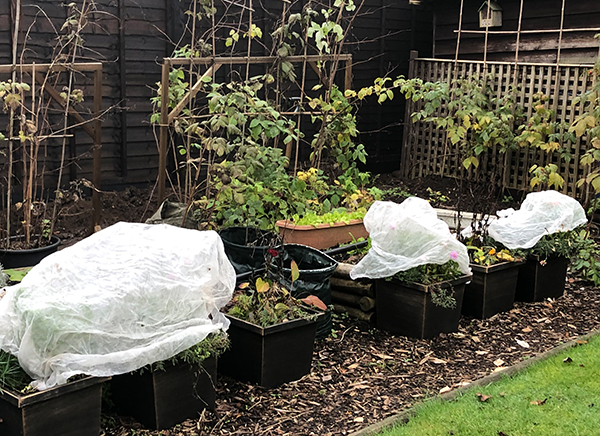
My number 1 job has been to protect several half-hardy or tender plants from the looming cold snap. As a result, the garden is now dotted with ghostly misshapen humps of horticultural fleece, covering pots of African daisies (osteospermums) and blanket flowers (Galliardia).

Cover plants with horticultural fleece to protect them from frost
Cover tender plants with horticultural fleece to protect them from frost

Meanwhile, my husband has done a fabulous job of wrapping up the tree fern. The crown is the key to future fronds, so he’s made sure that’s well protected with a ball of fleece, and he’s protected the trunk with some old carpet.

A well-wrapped tree fern

You can buy horticultural or ‘garden fleece’ in sheets or rolls, or many garden centres will trim off the amount you need from large rolls of the fabric.

It tends to be very light weight (usually 17g or 30g per square metre), so make sure you secure the fleece with twine or pegs, or anchor the edges down with large stones, so that it doesn’t blow away. Alternatively you can buy fleece ‘jackets’ with drawstrings or zips, which you can secure over individual plants.

Secure fleece from blowing away

Fleece allows light and water to pass through it, so you can leave it in place for a few days, but remove it once the threat of frost has passed, as it reduces the amount of light getting to the plant and creates a microenvironment around the plant that is ideal for pests.

Eco-friendly alternatives. It is worth noting that horticultural fleece is made of polypropylene, a single-use plastic product that can’t be recycled. When it eventually starts to shred or go into holes it will, unfortunately, become plastic waste.

I’ve been reusing mine for years. I’ve even washed it. But when the time comes to replace it I will be looking for environmentally friendly alternatives – if anyone has any recommendations I’d love to hear them!

Providing permanent cover

Of course, the ultimate eco-friendly cover is glass. So, it’s ideal if you are able to move plants to a permanent greenhouse or cold frame. I don’t have much space to move plants under cover in the winter, but I’m able to store a few plants in my little pop-up greenhouse and cold frames in a sheltered alcove between the house and garage.

I’ve draped fleece over my prized abutilon ‘Kentish Belle’, which is still flowering, and moved it to a more sheltered spot under the kitchen window.

Abutilon 'Kentish Belle' has a long flowering season
Abutilon ‘Kentish Belle’ has a long flowering season and is hardy to -5oC, but I’ve found it needs a bit of protection over winter

Natural frost protection

As for the rest of my perennials and shrubs, they will have to contend with whatever this winter throws at them. I try not to buy too many tender plants as I don’t have the time to dig them up and protect them every winter.

As always though, I have left as much as possible of the previous season’s growth intact to protect the plant crowns beneath. This has the added benefit of looking quite spectacular when the frost does hit.

Last season's growth provides natural frost protection
Last season’s growth provides natural frost protection