February 2022: end of month review

The weather has definitely hampered quality time in the garden this month. It has been cold, wet and blustery. The UK was hit by several major storms, with Storm Eunice wreaking particular havoc in the south of England.

So, although I’ve been itching to start tidying the borders, they have been best left alone. The winter’s debris has provided a comforting duvet of protection from regular frosts over tender new growth…

The February garden
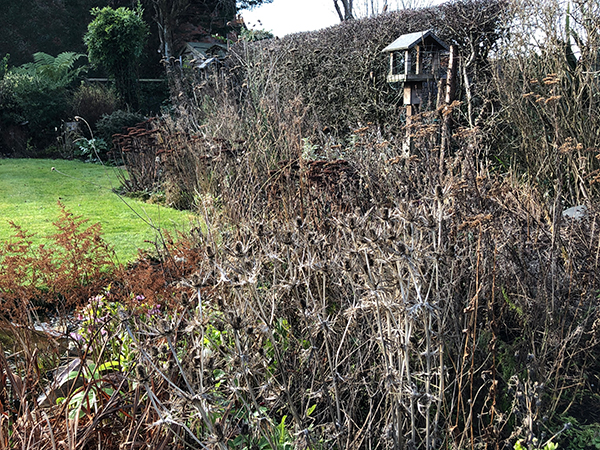
The February garden: a tangled mess of winter structure

…and a haven for insects and other wildlife, sheltering from the inclement weather.

Protective winter structure in the borders

Pockets of colour

Most of the garden is a brown-beige tangle of dead stems and seedheads, but pockets of colour have begun to shine through.

Pockets of colour in the February garden
Splashes of colour around the garden: crocuses, snowdrops, rose hips, aconites, hellebores and pansies

At the shady end of the garden, a few delightful clumps of snowdrops and aconites were the first of the spring bulbs to emerge.

Snowdrops and aconites

With cheery crocuses soon joining the party.

Crocuses bring colour to shady areas

February jobs

Although I left the borders to their own devices, I still managed to get on with a few jobs. I tidied the shed, cut down the autumn raspberry canes and planted a few more snowdrops.

Planting snowdrops in the green

I unearthed my dahlia tubers from winter storage…

Unearthing dahlia tubers from winter storage

…and potted them up.

Pot up dahlia tubers

I harvested the last of 2021’s potatoes, which had overwintered well outside in the sacks that I grew them in.

Final harvest of last year's potatoes
Final harvest of last year’s potatoes

And started chitting new seed potatoes for this year’s crop.

The right kind of chit: short, knobbly, green sprouts
Chitting seed potatoes on a window sill

I even started a few indoor sowings.

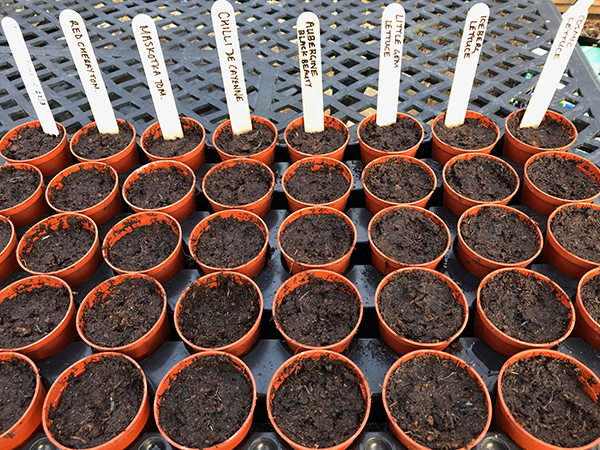
First sowings: tomatoes, aubergines, chillis and lettuce
First indoor sowings: tomatoes, aubergines, chillis and lettuce

Improving areas

It was also gratifying to see some improvement in a couple of the garden’s problem areas.

Autumn-planted hellebores appear to be thriving in a previously problem area under an apple tree.

Hellebores thriving under an apple tree

And the strip of soil next to the curb in the front garden is looking tidier after a bit of weeding and extra planting.

Curbside progress
Curbside progress: snowdrops and primroses

Lunchtime walks

When I haven’t been in the garden, I’ve taken my 15 minutes of green further afield, enjoying some short walks around my Hampshire village and along the Basingstoke canal.

Basingstoke canal in February
Canal walk

In the churchyard, storm Eunice brought down huge clumps of mistletoe from the trees.

Mistletoe brought down from trees during storm Eunice

But early blossoms somehow remained intact.

First blossom in February

And I particularly enjoyed seeing larger swathes of snowdrops than I’ve managed to achieve (yet) in my garden.

Naturalised snowdrops

Patio pots

Back in the garden, the pots on my patio are slowly transforming, from early shoots to first blooms.

First blooms of the year in patio pots
From early to late February, the first layer of bulbs in my pots are starting to emerge

An early sign of wonderful things to come.

First iris of 2022
First iris of 2022

How to prune autumn-fruiting raspberries

Despite the appalling weather, I managed to get out in the garden this week for one of my favourite 15-minute gardening tasks – chopping my Autumn Bliss autumn-fruiting raspberries down to the ground.

It’s hard to imagine that February is the perfect time of year for many gardening tasks, but this is definitely one of them. The plants are dormant at the moment, so a hard prune back to the ground during cold weather won’t damage them. Within a few weeks though they will be ready to shoot back into action, so now is the time to give them the chop.

Simply chop!

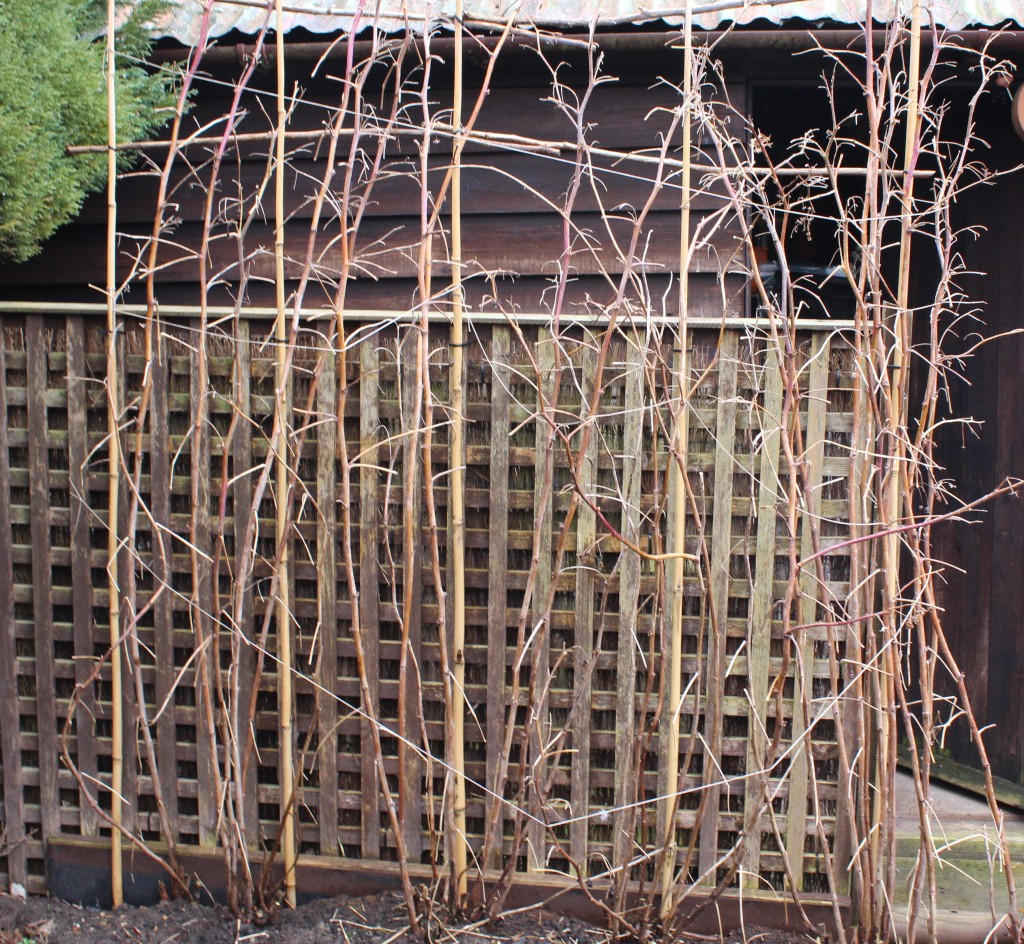
Autumn-fruiting raspberries are ‘primocanes’, which means they produce fruit on new wood. I have six Autumn bliss raspberry plants in a small bed near the bottom of the garden. When in leaf they provide a perfect screen in front of the shed.

All you need to do at this time of year is remove last year’s old growth.

Raspberry canes ready for cutting down
Last year’s autumn raspberry canes

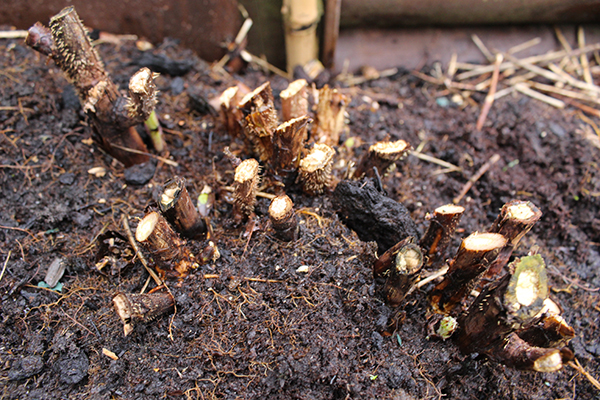
Cut the old canes as close to the ground as you can, making sure your secateurs are sharp for a clean cut.

Chop autumn raspberries canes to the ground

Bonus leftovers

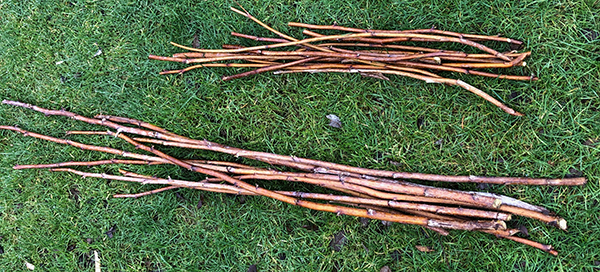
And the great thing is that the old raspberry canes can be put to use in the rest of the garden. I trim off the twiggy side branches and flimsier tips to make sturdy stakes that I then use to prop up my perennials.

Raspberry cane stakes

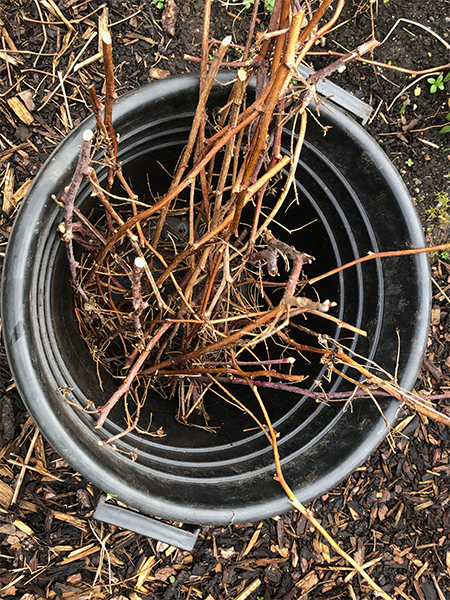
And the twiggy bits can be shredded and used as a mulch, so nothing goes to waste.

Twigs for shredding
Twigs for shredding

Autumn- vs summer-fruiting raspberries

Summer-fruiting raspberries are slightly more complicated in that they are ‘floricanes’, which means they fruit on the previous year’s wood. The old canes need to be removed after they have fruited to encourage new growth, as that’s what next year’s raspberries grow on.

Autumn harvest

Unlike their summer counterparts, autumn-fruiting raspberries are pretty much self-supporting, although I find they need a bit of string around them to stop them flopping forward over the bed. They start to ripen in late summer and, from just six plants, I get a good harvest that usually lasts all the way into October.

Autumn raspberries
Harvest the raspberries from late summer to first frosts

So, if you are new to raspberry growing, I highly recommend giving autumn-fruiting raspberries a go. It couldn’t be simpler.

Seed buying: a gardener’s addiction

Have you ever been to your local garden centre with one (or two) purchases in mind and come away with a trolley full of goodies? Of course you have. You’re a gardener and you love all things gardening related, especially the joy of introducing new plants to your garden. Let’s face it, most of us are self-confessed plantaholics.

Room for one more plant
There’s always room for one more plant…somewhere!

But I honestly thought, given the time of year, I would be able to restrain myself last weekend when I popped in to my local garden centre for a few seed potatoes and some ‘top-up’ packets of veg seed.

I had been through my seeds and was delighted to find that most of them were still in date for this year. I made a list of essential replacements, which comprised 6 packets of seeds: aubergines, cucumbers, mixed lettuce leaves, cabbages, radishes and Busy Lizzies. And I fully intended to stick to the list.

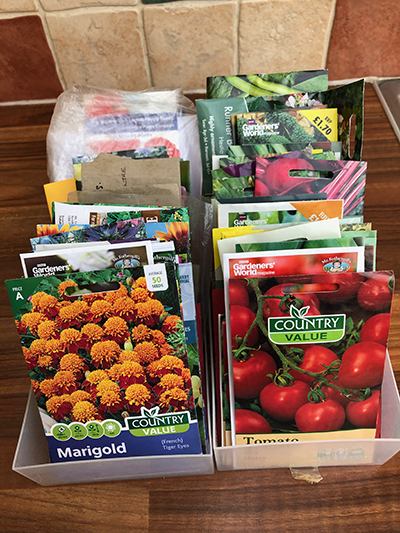
Organized seed packets
My simple seed filing system: flowers in one tray, veg in the other

You would think after more than 50 years I would know myself a little better!

So many options

Presented with row after row of colourful, enticing seed packets, all restraint went out the window.

It started slowly. I bought my usual outdoor slicing variety of cucumber, but what’s that? A long variety of cucumber that can be grown outside as well? Ooh, I need to give that a go!

Two outdoor varieties of cucumber

But then it started to gather momentum. Why buy one packet of mixed lettuce leaves, when there are several varieties to try?!

I already had courgette seeds and three varieties of tomato back at home, but wouldn’t it be nice to grow some yellow courgettes as well? And I’ve heard Sungold tomatoes are delicious. And, as we eat peppers and mange tout on a regular basis, why not try to grow those this year as well? Not sure where, but hey, I’ll find space somewhere!

Extra tomatoes and courgettes

Before I knew it, 5 packets of ‘top up’ veg seeds had become 12 exciting possibilities.

Just a few 'top up' seeds
Just a few ‘top up’ seeds

So, I needed to be more reserved with the flower seeds then. Just a packet of Busy Lizzies right? Wrong! To be fair, I did manage to resist quite a few, and put several packets back before reaching the checkout, but I finally came away with 7 packets of colourful awesomeness.

Flower seeds
How to resist?

It could be worse

My husband hung back from the till, decidedly unimpressed with the thought of ‘extra courgettes’ (sorry, my love) and not daring to view the final tally. But, hey, it’s cheaper than jewellery, right?!

So, let the sowing commence. I may need several lifetimes to sow and grow everything I’d like to, but it promises to be a fun year in the garden.

Happy sowing everyone!

February in the garden: prepare, plant and prune

February can be a frustrating month. I’m itching to clear away the winter debris but even here, in the South of England, heavy frosts and downpours (and even snow) are likely to prevent a major tidy-up for another month. My borders need their protective winter duvet of last year’s growth for just a little bit longer.

The Beast from the East in 2018 was a reminder to expect the unexpected in February

Yet, as the earliest signs of Spring begin to emerge, there are lots of things I can do to prepare my happy place for the gardening year ahead. Having been out of action for a little while, I’m excited. Here we go again!

Plan and prep

I love planning what flowers I want to surround myself with, what veg I want to eat and where it’s all going to grow.

It’s hard to imagine this…

Pretidy winter garden
February 2022

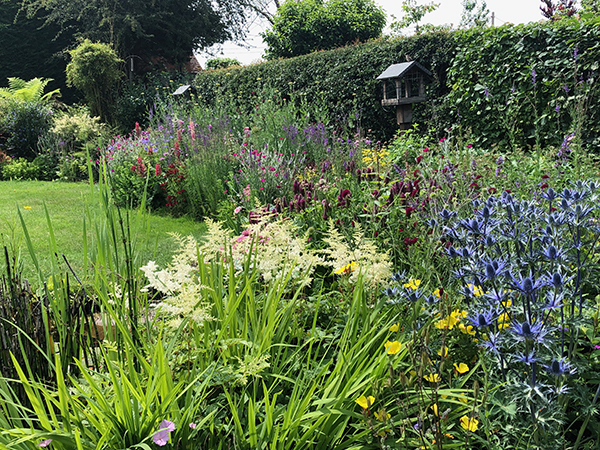
Becoming this…

June flower border 2021
June 2021

But last year it did!

The garden may not end up looking anything like the vision in my head right now, but it’s a lot of fun imagining what it could look like.

Get organized

On a more pragmatic note, it’s also worth being prepared for the frenzy of sowing and growing that is but a few weeks away. If you haven’t done so already, now is the time to check your seed packets and order in what you haven’t got, tidy your shed and wash your pots.

Organized seed packets
Check what seeds you’ve already got

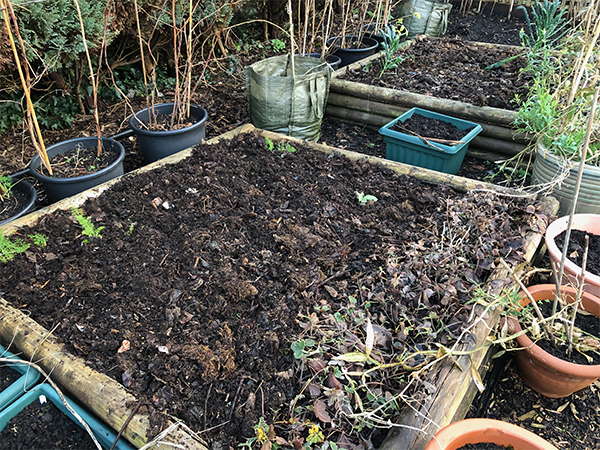
You can also prepare your veg beds now by removing weeds and applying an organic mulch.

Vegetable bed mulched with garden compost
A well-mulched vegetable bed

Pruning

Many plants need to be pruned in winter when they are dormant. In my garden, this applies to the few roses that I have in pots and my apple and pear trees, and this year I’m going to have a go at some (hopefully) restorative winter pruning of honeysuckles that have become very woody.

Apple-tree-pruning
Prune apple trees in winter while they are dormant

Early sowings

February is also a good month to start sowing indoors. I’ll be getting tomatoes and aubergines started from seed this month, as well as the first of some successional sowings of lettuce, as I want to stop buying so much of it from the supermarket (it always comes wrapped in plastic!).

Indoor sowings
Last year’s indoor sowings of tomatoes, aubergines, chillis and lettuce

Bare-root planting

Winter is also the best time to plant bare-root trees and shrubs, so that they can get established before expending the energy they’ll need to produce leaves and flowers. Roses, fruit bushes and canes, hedging and dogwoods (Cornus) can all be started as bare-root plants. Last year I planted two bare-root climbing roses, which are now well established.

February checklist

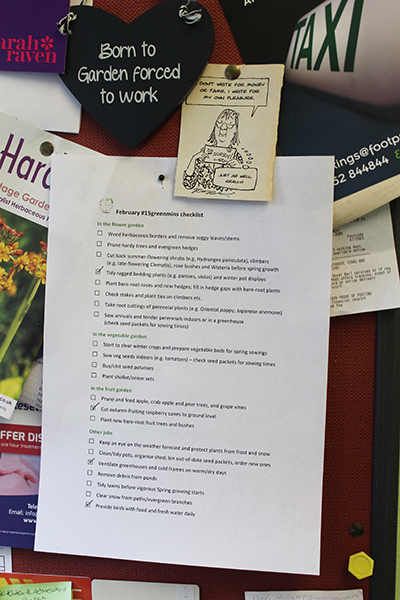
It may all sound a bit daunting, but if you break it down into 15-minute tasks you’ll be surprised how much you can get done. I get a great sense of achievement from ticking things off a list, so I make a monthly checklist to help me stay on track. Take a look at my February checklist of gardening jobs, which can all be achieved 15 minutes at a time.

February-#15greenmins-checklist
February #15greenmins checklist: you can do anything for 15 minutes, including gardening!