
Some garden jobs have an early Spring deadline on them. Hard pruning certain plants is one of them. If, like me, you are a reluctant pruner – beware! This can be a traumatic process.
As we head into April (how did that happen?!), don’t delay in giving the 3 plants featured below the big chop as soon as possible.
Shrubby Cornus (dogwood)
Mid-March to mid-April is the perfect time to hard prune shrubby dogwoods, ideally before they start bursting into leaf. These plants are usually cultivated for their colourful winter stems. They are not to be confused with flowering dogwoods, which are usually trees. Common types of shrubby dogwood include:
- Cornus alba ‘Sibirica’, which has vivid red stems
- Cornus sanguinea ‘Midwinter Fire’, which has flame-orange stems
- Cornus sericea ‘Flaviramea’, which has distinctive yellow-green stems
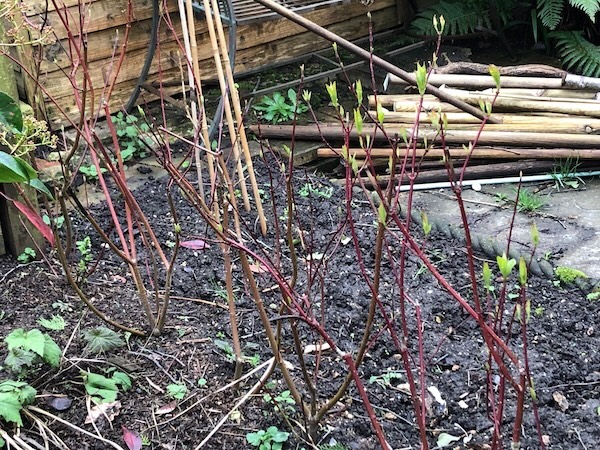
I’ve had the ‘Midwinter Fire’ variety in a pot for several years. It was spectacular over the winter, but the intensity of colour started to fade in March.

I’ve left it alone up to now, but I figured it was time to be brave and go for the chop. I cut the stems down to about 2 inches from the base above a leaf node.
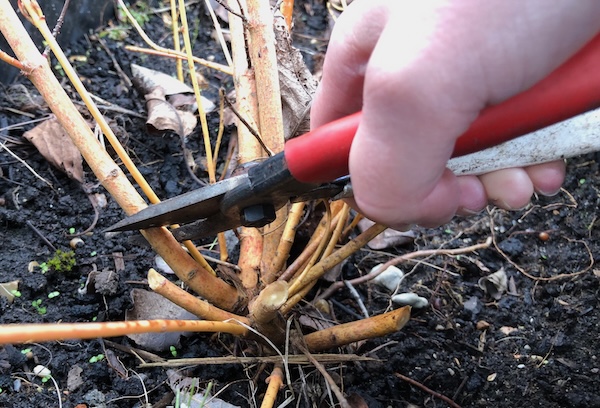
It looks brutal and I will probably lose sleep over it until new stems start to grow.
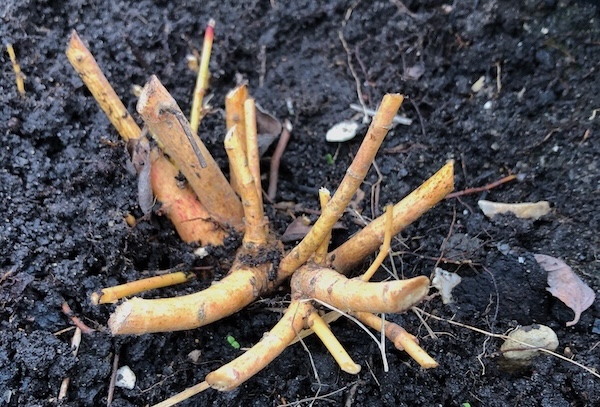
I’ll also be moving this particular Cornus out of its pot into a sunny border spot. The stems are more vibrant if grown in full sun.
One added bonus of tidying up this plant was an offshoot with a decent root system. I separated it from the plant and potted it up, so I should get a second dogwood for free. Perhaps I will eventually have a matching pair standing on guard on either side of the pond.
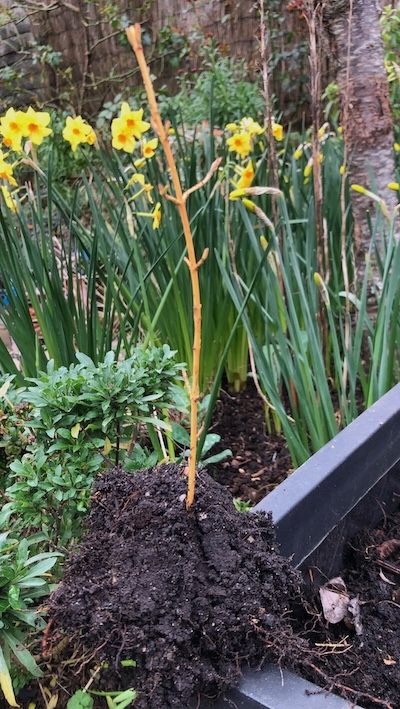
I also kept the cuttings and used them as supports for my jonquils (Narcissa jonquila). They were getting battered in the wind but the dogwood stakes kept them upright.
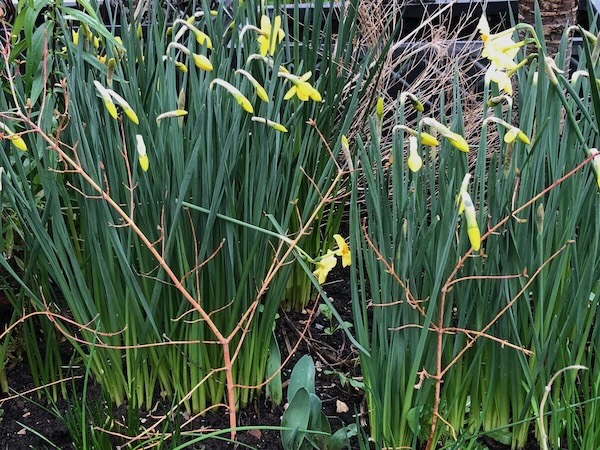
Meanwhile, I haven’t pruned the Cornus alba ‘Sibirica’ hedging that I put in last Spring. I want that to thicken up and get more established first.
Buddleja davidii (standard Buddleja)
Standard Buddlejas (or Buddleias) should also be cut right down at this time of year to encourage new bushy growth. Chop them to abut 30cm (1 foot) above ground. Otherwise, they get leggy with just a few blooms at the top of the plant.
My husband had already cut our Buddlejas in November to about half their summer height. He loves hacking plants down!

This partial reduction in height reduces the plant’s wind resistance and prevents ‘root rock’ over the winter months. Buddlejas can get very tall and as such get battered by high winds. This loosens the roots and weakens the plant.
But now is the time for the big chop. Cut at an angle just above the first or second growing shoot from the base. Use sharp loppers or a pruning saw for thicker stems. Remove any dead stems. You’ll be left with a woody clump but don’t panic – it will grow back!
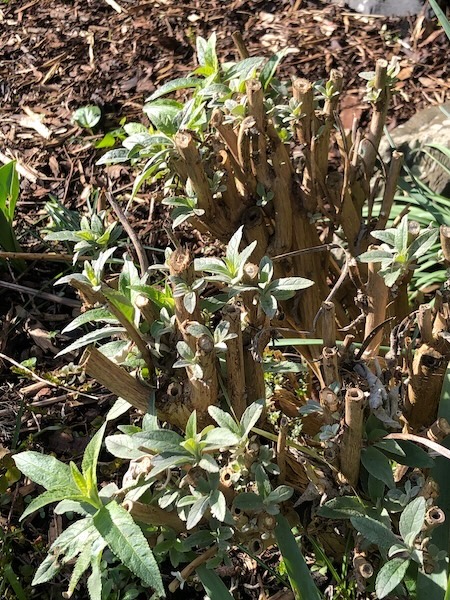
For more information see Pruning Buddleja davidii
It’s brutal but essential for the health of the plant. You’ll get bigger better blooms that visiting butterflies will thank you for.
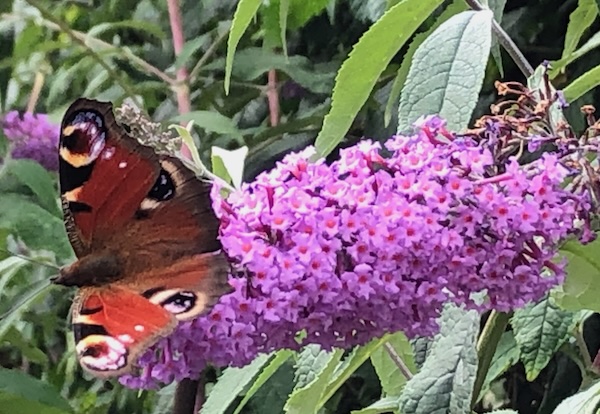
Important note: Buddleja alternifolia and Buddleja globosa flower on last year’s growth, so don’t chop these plants in the same way.
Deciduous ornamental grasses
Finally, now is the time to cut back any deciduous ornamental grasses – the ones that have turned completely brown. They give the garden great structural interest through winter, but now this year’s shoots need room to grow.
I have one patch of Zebra grass (Miscanthus sinensis ‘Zebrinus’). It forms a majestic clump of plumed seed heads next to the shed.
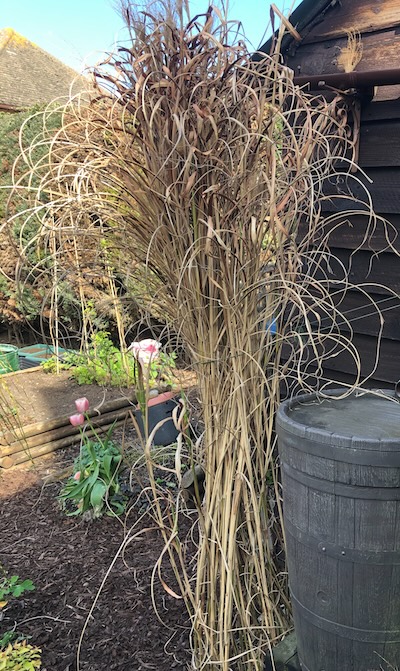
Every year I cut the old growth right back to the base with sharp secateurs, avoiding the green shoots that are starting to emerge. One top tip: wear long-sleeved clothing as the grass can be very sharp and and/or scratchy. I shred the old stems and add them to the compost.
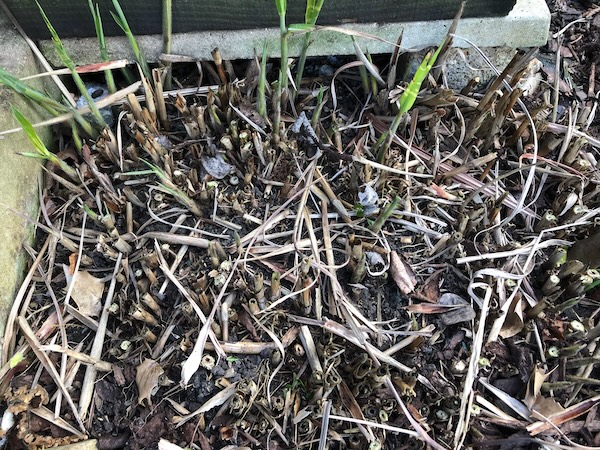
If you don’t cut these grasses down soon, new shoots will struggle to get through. The longer you leave it the harder it will be to cut out the old stems without affecting the new growth.
So don’t delay – chop chop!