3 Plants to Cut Right Down Right Now

Some garden jobs have an early Spring deadline on them. Hard pruning certain plants is one of them. If, like me, you are a reluctant pruner – beware! This can be a traumatic process.

As we head into April (how did that happen?!), don’t delay in giving the 3 plants featured below the big chop as soon as possible.

Shrubby Cornus (dogwood)

Mid-March to mid-April is the perfect time to hard prune shrubby dogwoods, ideally before they start bursting into leaf. These plants are usually cultivated for their colourful winter stems. They are not to be confused with flowering dogwoods, which are usually trees. Common types of shrubby dogwood include:

  • Cornus alba ‘Sibirica’, which has vivid red stems
  • Cornus sanguinea ‘Midwinter Fire’, which has flame-orange stems
  • Cornus sericea ‘Flaviramea’, which has distinctive yellow-green stems

I’ve had the ‘Midwinter Fire’ variety in a pot for several years. It was spectacular over the winter, but the intensity of colour started to fade in March.

Cornus sanguinea 'Midwinter Fire'
Cornus sanguinea ‘Midwinter Fire’

I’ve left it alone up to now, but I figured it was time to be brave and go for the chop. I cut the stems down to about 2 inches from the base above a leaf node.
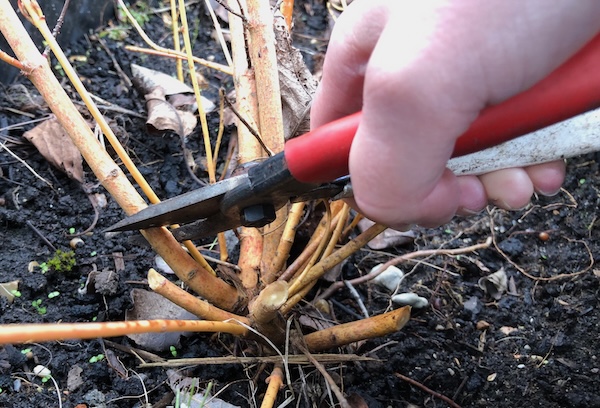
Cut Cornus near the base to encourage new colourful stems

It looks brutal and I will probably lose sleep over it until new stems start to grow.
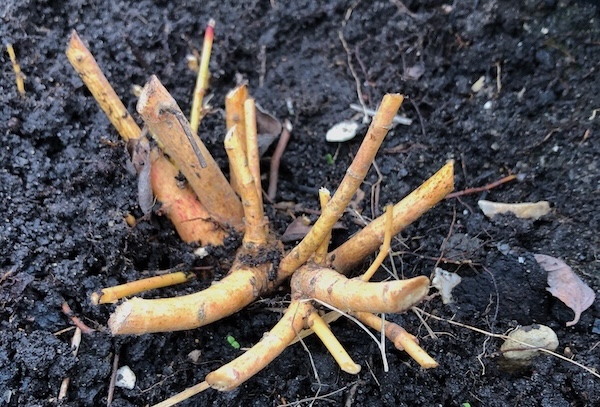
Pruned Cornus
Pruned Cornus

I’ll also be moving this particular Cornus out of its pot into a sunny border spot. The stems are more vibrant if grown in full sun.

One added bonus of tidying up this plant was an offshoot with a decent root system. I separated it from the plant and potted it up, so I should get a second dogwood for free. Perhaps I will eventually have a matching pair standing on guard on either side of the pond.
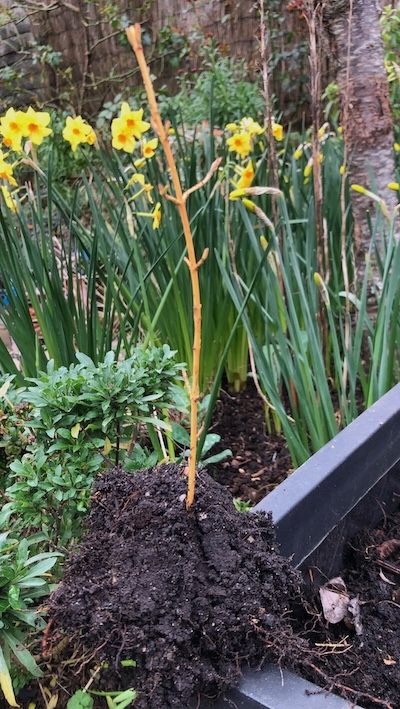
Extra Cornus for free

I also kept the cuttings and used them as supports for my jonquils (Narcissa jonquila). They were getting battered in the wind but the dogwood stakes kept them upright.
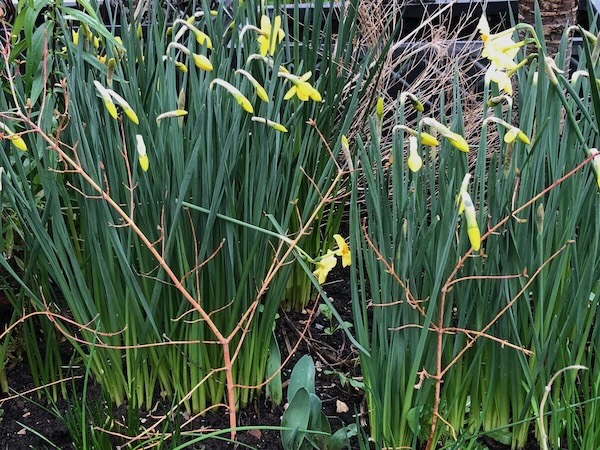
Pliable Cornus cuttings make great stakes for other plants

Meanwhile, I haven’t pruned the Cornus alba ‘Sibirica’ hedging that I put in last Spring. I want that to thicken up and get more established first.
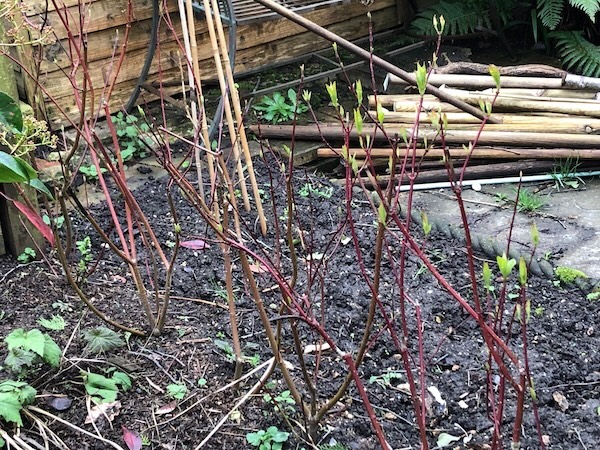
Young Cornus alba 'Sibirica' (red stemmed) hedging
Young Cornus alba ‘Sibirica’ (red stemmed) hedging

Buddleja davidii (standard Buddleja)

Standard Buddlejas (or Buddleias) should also be cut right down at this time of year to encourage new bushy growth. Chop them to abut 30cm (1 foot) above ground. Otherwise, they get leggy with just a few blooms at the top of the plant.

My husband had already cut our Buddlejas in November to about half their summer height. He loves hacking plants down!

Partially pruned Buddleia

This partial reduction in height reduces the plant’s wind resistance and prevents ‘root rock’ over the winter months. Buddlejas can get very tall and as such get battered by high winds. This loosens the roots and weakens the plant.

But now is the time for the big chop. Cut at an angle just above the first or second growing shoot from the base. Use sharp loppers or a pruning saw for thicker stems. Remove any dead stems. You’ll be left with a woody clump but don’t panic – it will grow back!
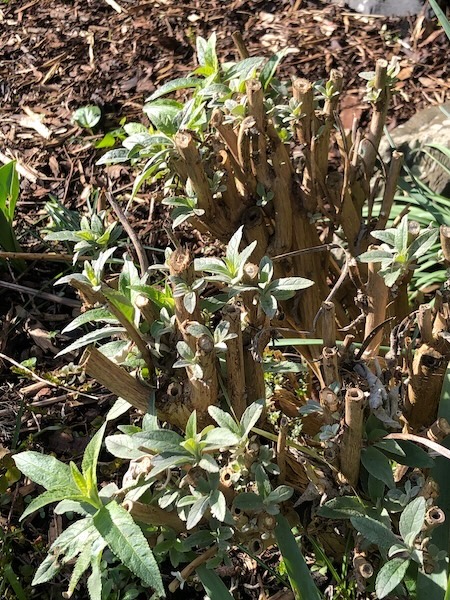
Cut Buddleja to about 1 foot off the ground

For more information see Pruning Buddleja davidii

It’s brutal but essential for the health of the plant. You’ll get bigger better blooms that visiting butterflies will thank you for.
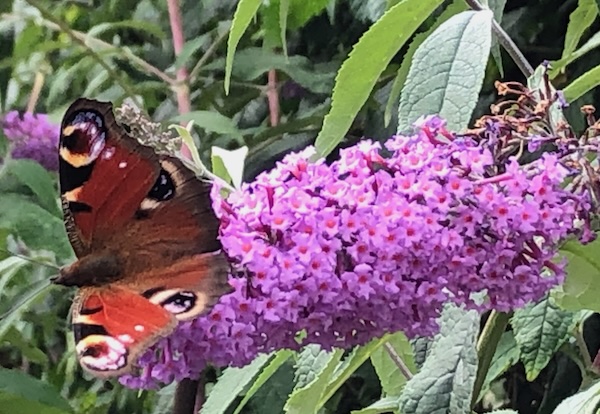
Peacock butterfly on Buddleja pannicle

Important note: Buddleja alternifolia and Buddleja globosa flower on last year’s growth, so don’t chop these plants in the same way.

Deciduous ornamental grasses

Finally, now is the time to cut back any deciduous ornamental grasses – the ones that have turned completely brown. They give the garden great structural interest through winter, but now this year’s shoots need room to grow.

I have one patch of Zebra grass (Miscanthus sinensis ‘Zebrinus’). It forms a majestic clump of plumed seed heads next to the shed.
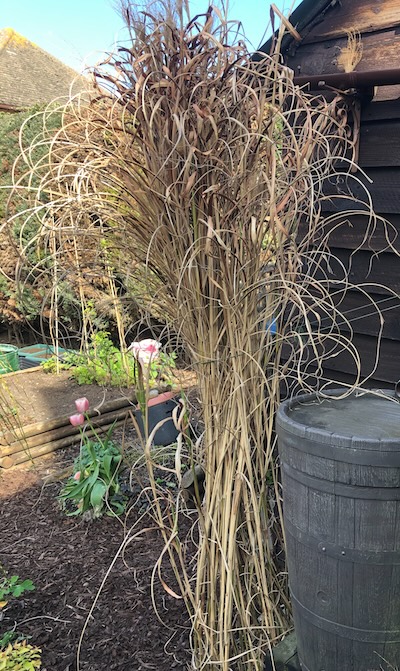
Zebra grass
Over-wintered Zebra grass

Every year I cut the old growth right back to the base with sharp secateurs, avoiding the green shoots that are starting to emerge. One top tip: wear long-sleeved clothing as the grass can be very sharp and and/or scratchy. I shred the old stems and add them to the compost.
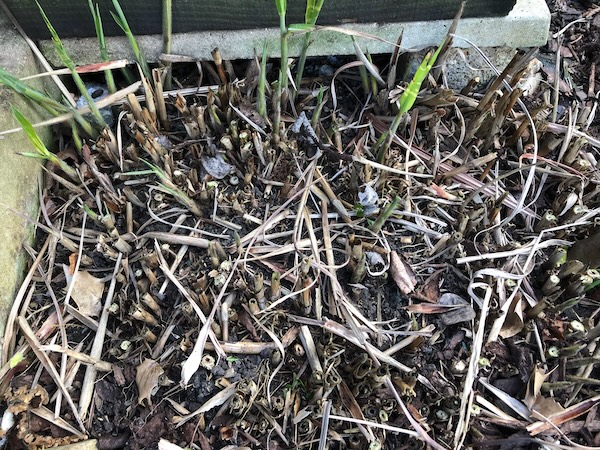
After the hack
After the hack

If you don’t cut these grasses down soon, new shoots will struggle to get through. The longer you leave it the harder it will be to cut out the old stems without affecting the new growth.

So don’t delay – chop chop!

Live the Life you Love

View from patio

I couldn’t have picked a better day to start writing again – the Vernal Equinox, the start of Spring. I’m sitting on my sun-warmed patio under a cloudless sky. A ruckus* of house sparrows is squabbling in the hawthorn hedge (*I think this should be the new collective noun for a flock of sparrows, in my garden at least!).

Notebook and pen poised (I can’t get creative on a computer) and mug of steaming coffee to hand, the cover of my 2026 pocket diary leaps out at me: “live the life you love”.

Those words feel particularly apt at the moment. I was diagnosed with triple-negative breast cancer in January. I’m now recovering from two operations that removed the small tumour and surrounding pre-cancerous cells. It’s an aggressive type of breast cancer, but it has been caught early on a screening mammogram. Please don’t ignore the letter Ladies – get it done!

There is nothing quite like a cancer diagnosis to wake a person up and take stock of their life. I’m happy to say I have few regrets and I thank God for all my blessings. Not least a loving, understanding husband, caring family and overwhelmingly supportive friends. Right now I’m particularly thankful that I have a green space of my own in which to cry, laugh, potter and relax. A space where I can find peace and joy in abundance.

My Happy Place

This is the life I love: making compost, sowing seeds, figuring out where I can put ‘just one more plant’. I feel privileged to have a front row seat to the latest sparrow melodrama. I love hearing the gentle hum of Queen bees emerging from hibernation to conduct their first drowsy patrols. This time of year lifts my spirits, as the garden exhales after a long wet winter. Branches are bursting with buds and fresh green growth is emerging from the sodden earth.

I’m a plantaholic, so I take special delight in the pockets of colour erupting like miniature celebrations around the garden.

From the simple yet eye-catching remnants of winter…

Rose hips
Rose hips

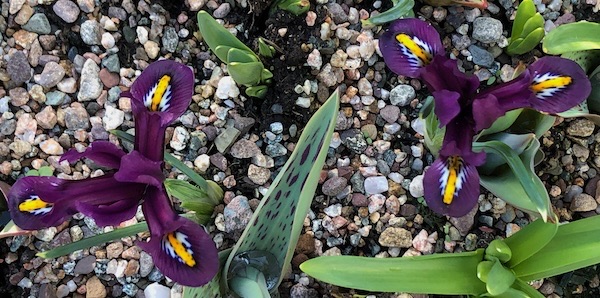
To the intricate petals of early-flowering spring bulbs…

Iris reticulata
Iris reticulata

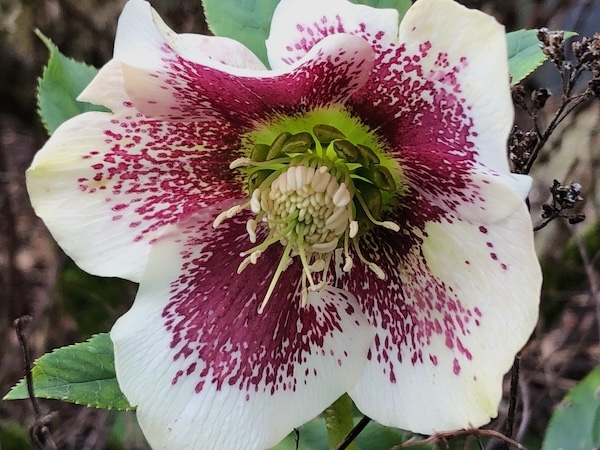
From tried and tested stalwarts of the season…

Hellebore
Hellebore

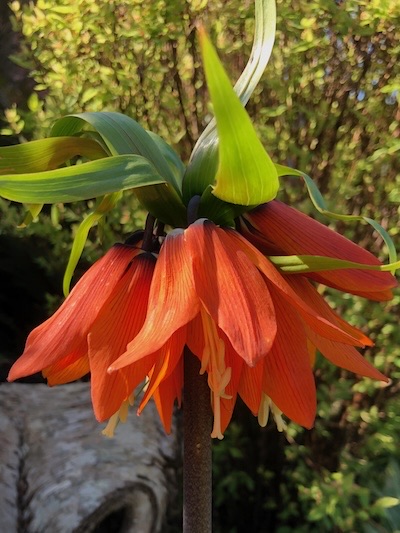
To thrilling newbies…

Crown Imperial Fritillaria

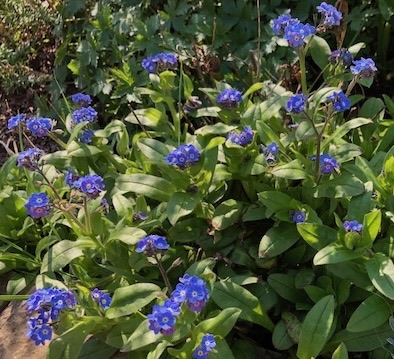
From plants that have haphazardly seeded in the borders…

Forget-me-not
Forget-me-not

To plants that I have deliberately added for their sumptuous hues…

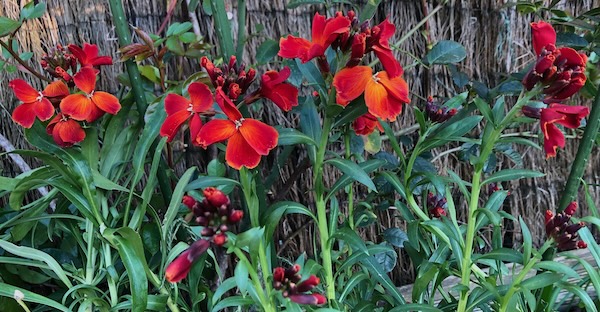
Wallflower 'Fire King'
Wallflower ‘Fire King’
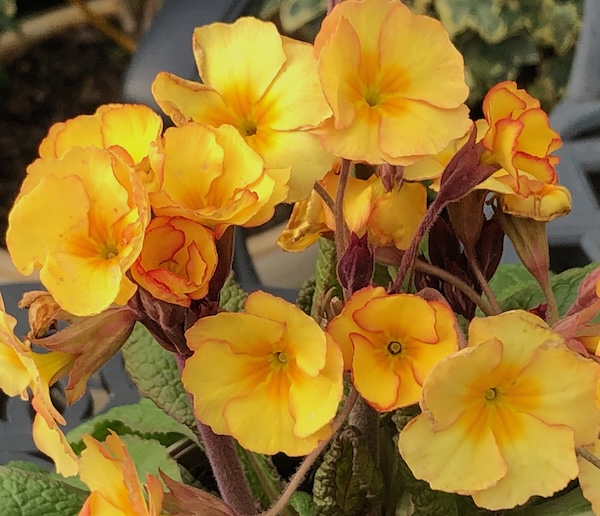
Polyanthus Goldnugget Apricot
Polyanthus ‘Goldnugget’ Apricot

Even the shrubs are getting in on the Spring festivities.

Early-flowering varieties with delicate blossoms…

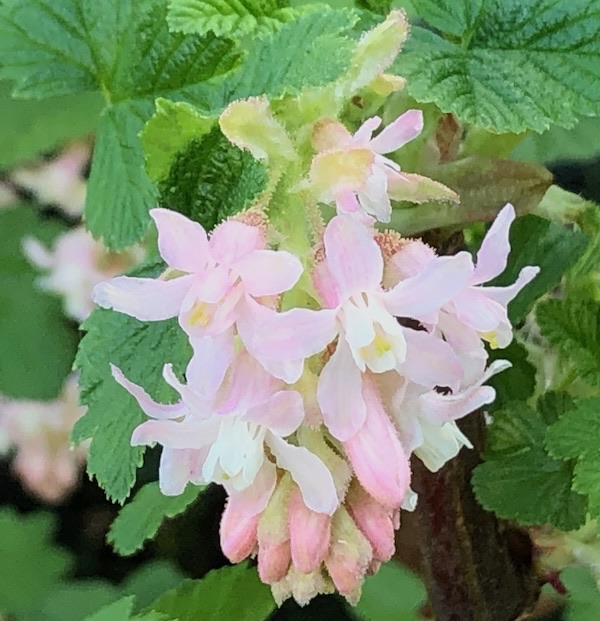
Flowering currant blossom
Flowering currant

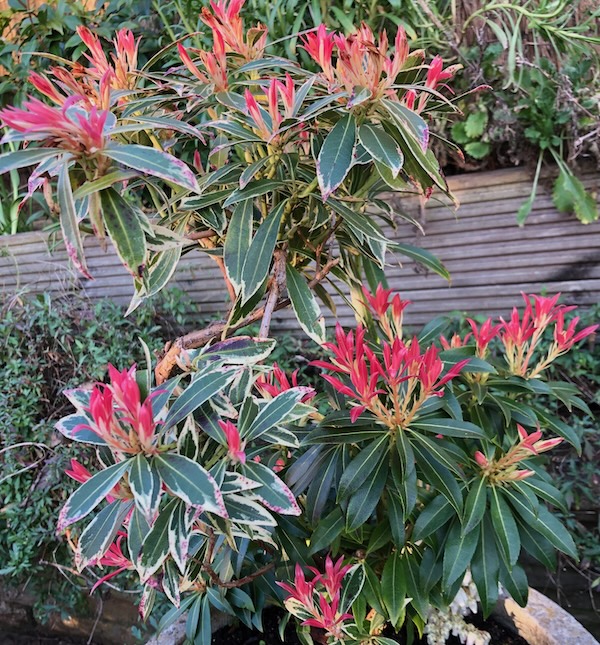
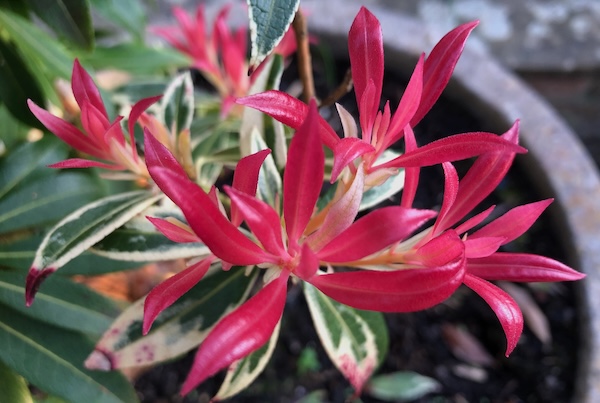
Or shrubs like Pieris that stun with their fiery new growth…

.

Of course, spring bulbs dominate the vista at this time of year.

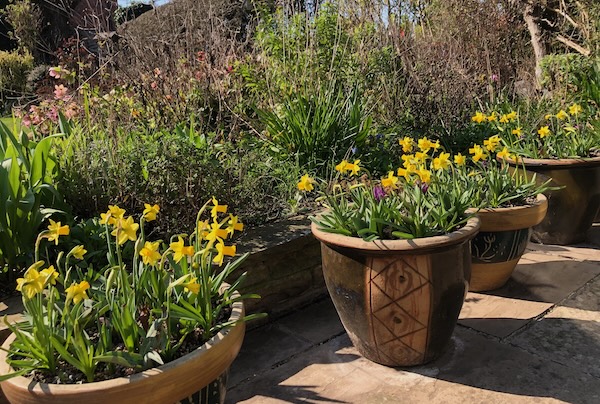
From miniature classics prized for their hardy reliability…

Patio pots of Tête-à-Tête daffodils

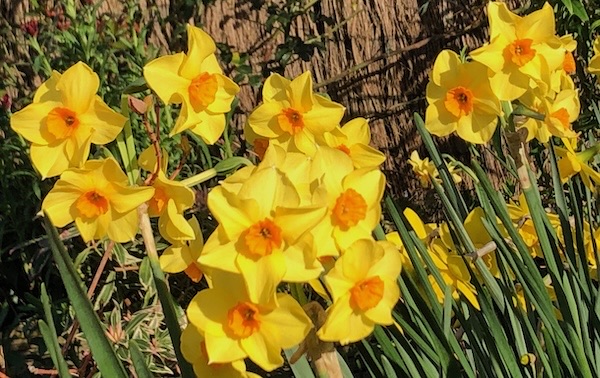
To tall graceful varieties with an intoxicating fragrance…

Jonquils – Narcissus jonquil
Jonquils – Narcissus jonquilla

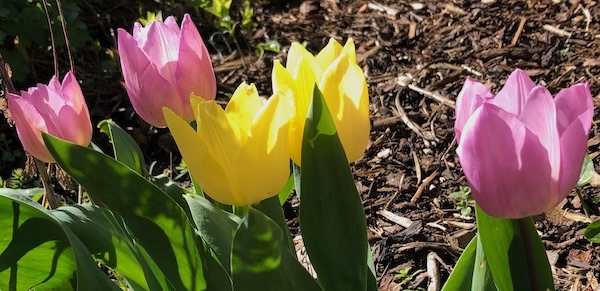
There are even some dwarf tulips already in bloom…

Early tulips
Early tulips

Not to be overshadowed by what’s going on in the garden, the over-wintered plants in the greenhouse are also vying for attention…

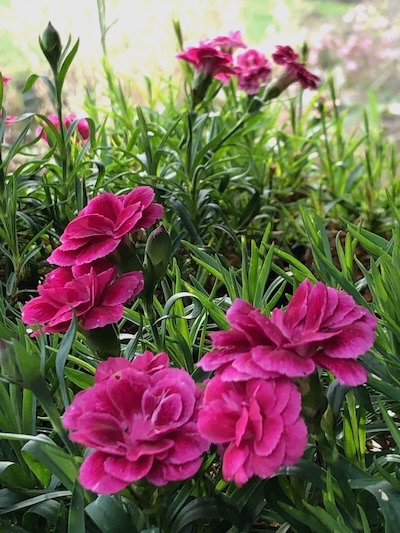
Dianthus
Dianthus

And then there are the bee magnets – the plants that provide all-important food for early-season pollinators…

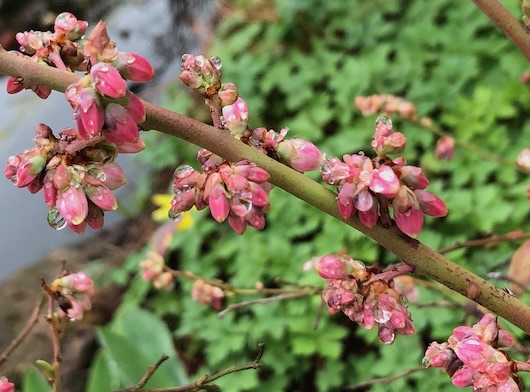
Blueberry blossoms
Blueberry blossoms
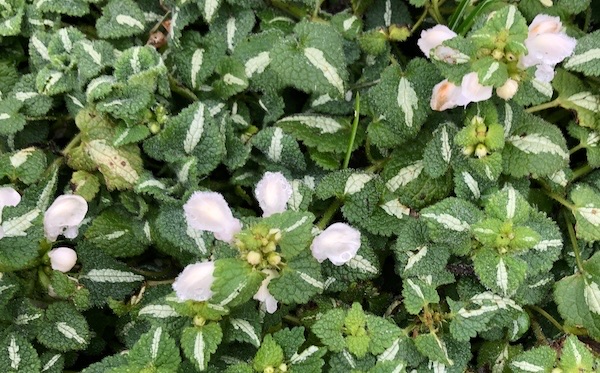
White dead nettle (Lamium species), often dug out as a weed – leave some in for the bees!

These are just some of the plants bringing me joy at the moment. What’s putting a smile on your face in your garden this month?

Now that I’m back online, I hope you’ll join me for 15 minutes of green this year. I’m hoping to have a go at square foot vegetable gardening with companion planting. I’ll also be trying to get the mossy lawn in better shape after a very soggy winter. And, of course, I will be packing the borders with glorious pollinator-friendly plants.

So watch this space. It’s the life I love and I’m living it!

How to choose the right Mahonia

Mahonias are fantastic evergreen plants, with clusters or spikes (racemes) of scented yellow flowers that are rich in nectar and a magnet for foraging bees in winter. The different species of Mahonia come in a range of sizes to suit any garden type, and flower at different times from late autumn to early spring.

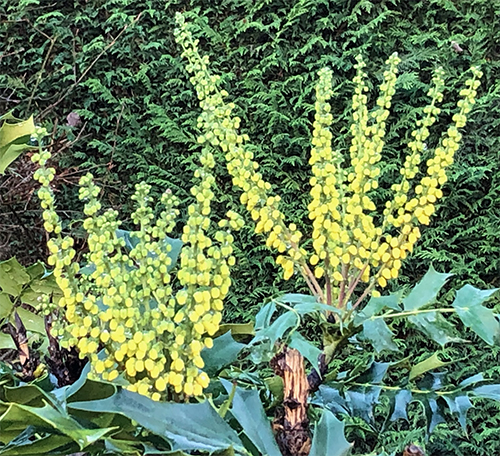
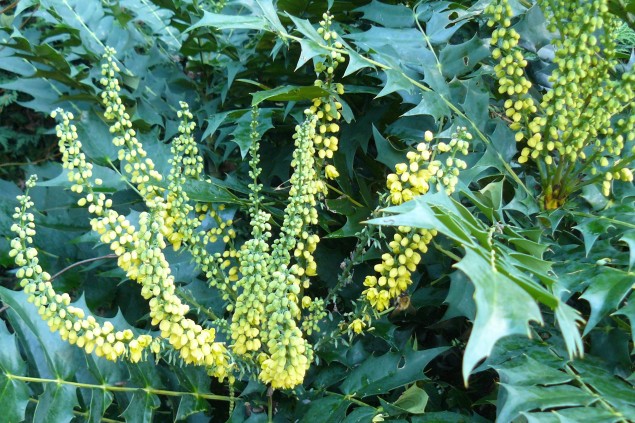
Mahonia in bud: a rich supply of nectar through the winter months
Mahonia in flower: a rich supply of nectar in December in my garden

Mahonia or Berberis?

Mahonias are members of the Barberry family (Berberidacae). However, botanists haven’t completely agreed on the nomenclature. Don’t be confused (as I was) if you see the same plant with two different names: Berberis and Mahonia. Mahonia aquifolium is also sometimes known by its common name of Oregon grape (Oregon adopted it as its official state flower in 1899) .

Best features of Mahonia

Mahonias tend to be planted for their bold architectural foliage. Most Mahonias are large shrubs with rows of glossy, deep green, spine-toothed leaves. However, there is a variety called Mahonia eurybracteata ‘Soft Caress’ that has spine-free foliage if you are looking for something softer.

The biggest delight is the characteristic clusters of scented yellow flowers. These are followed by pretty purply-blue berries.

Mahonias tolerate all types of well-drained soil, and will thrive in sun or shade. This makes them a good choice for ‘problem’ areas of the garden. Most are fully hardy, down to –15oC.

Mahonia berries

Key factors when choosing a Mahonia

To find the right Mahonia for your garden it is worth considering both size and flowering time. Although there are about 70 species of Mahonia, a few key varieties tend to be sold by garden centres or online retailers in the UK.

Mahonia x media ‘Winter Sun’, ‘Charity’ and ‘Lionel Fortescue’ can grow to 2.5–4 metres in height, although they can taken 10–20 years to reach their ultimate size. Being large upright shrubs, these varieties are ideal as a focal point at the back of a border. Sometimes they are used as hedging. They tend to flower between late November and early January.

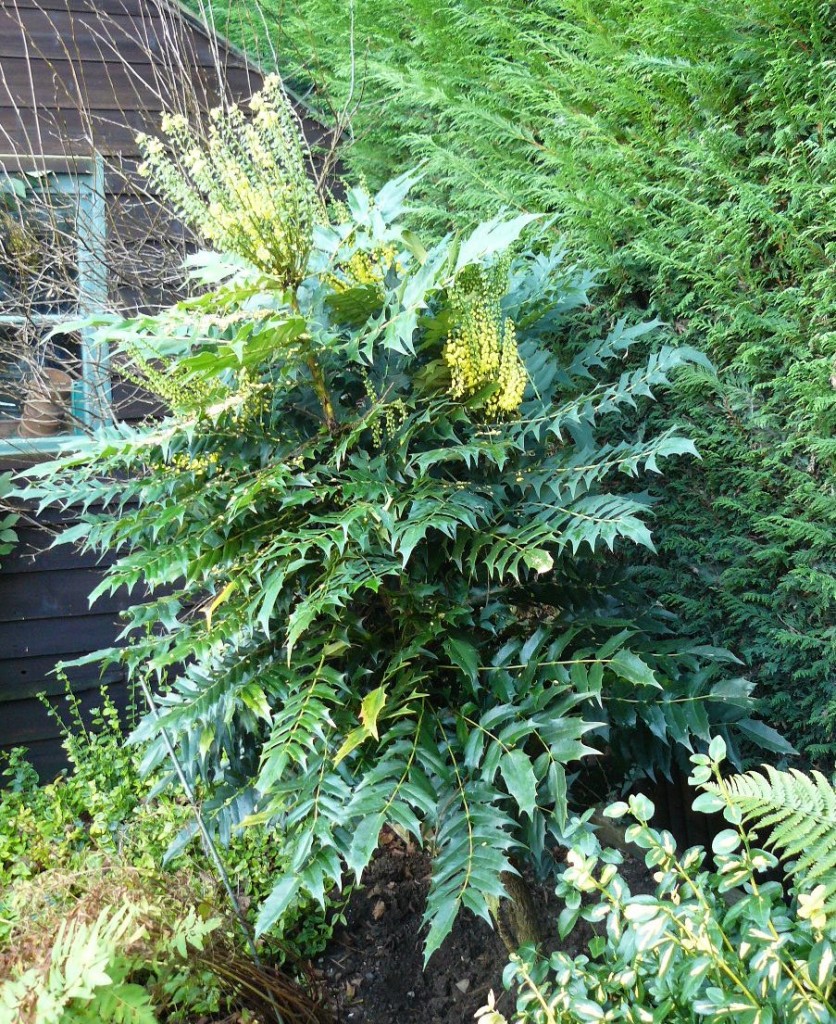
Mahonia japonica is smaller than the ‘Media’ varieties, but is another erect shrub that can grow to 1.5–2 metres in height. It also flowers between the end of November and March.

Mahonia japonica in a border of mixed shrubs at the bottom of my garden

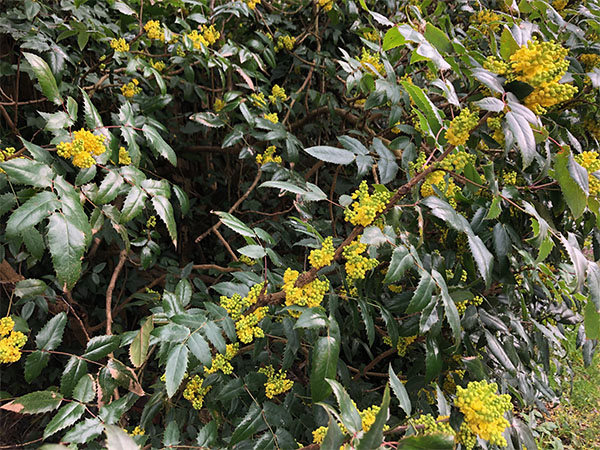
Mahonia aquifolium ‘Apollo’ is a more compact variety that grows in a low spreading dome. It reaches about 1 metre in height and spreads to about 1.5 metres.

Mahonia aquifolium 'Apollo' shrub
Mahonia aquifolium ‘Apollo’

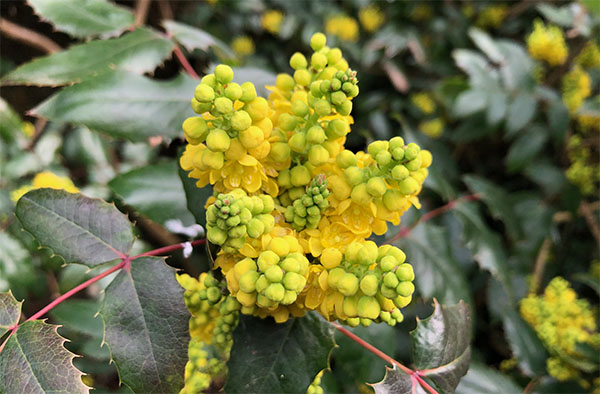
I pass this one on my daily dog walk. It has been bursting with compact clusters of intensely scented flowers all through February. It is thriving in a sheltered walkway next to a fence where it gets both sun and shade.

Highly scented flowers of Mahonia aquifolium 'Apollo'
Intensely scented flowers of Mahonia aquifolium ‘Apollo’

Mahonia repens has a low, creeping habit, with a height of 30–50cm and spread of 1 metre. It is ideal for shady ground cover, at the front of a border, or to cover a bank. This variety flowers in mid to late Spring (April/May).

Planting Mahonia

March is a good time to plant Mahonias. Make sure you choose a spot where your variety of choice has enough room to grow. I initially planted my Mahonia japonica too close to a conifer hedge and had to move it (see Mahonia on the Move). Dig a hole that is twice the size of the root ball. Plant the Mahonia with some well-rotted compost and firm it in well before giving it a good soak.

Mahonia care

Mahonias are low maintenance plants. They have low nutrient requirements, but like most shrubs will appreciate a mulch in early spring and/or autumn. This will also help to suppress weeds around the base. They can tolerate relatively dry conditions, so they only need watering in times of drought.

Pruning. Thankfully, pruning can be kept to a minimum, not least because the holly-like leaves can make it an uncomfortable process. In fact, you don’t need to prune a Mahonia at all unless your shrub loses its shape or gets too leggy.

If you do need to prune, make sure you are wearing a sturdy pair of gardening gloves. After flowering, remove any dead or diseased branches, or any branches that are growing out at an awkward angle or crossing with other branches.

If your Mahonia has become bare at the base, you can give it a hard prune by cutting a third of the branches down to about 15 cm (6 inches) from ground level. It will look a bit sorry for itself for a while, but this will help to generate fresh growth from the base.

To make plants bushier, cut back branches by 30–50%, which will stimulate the production of side shoots.

Avoiding disease. In general, Mahonias remain pest and disease free. Powdery mildew and rust are potential problems though. To help avoid these, make sure you water at the base of the plant and not on the leaves, regularly remove dead leaves and material from around the plant, and prune out a few central branches to let air circulate through the plant. Remove any affected leaves as soon as the problem appears so that it does not spread to the rest of the plant.

Go get a Mahonia

In summary, a Mahonia will add winter colour and nectar to your garden, will grow pretty much anywhere, and will be relatively low maintenance. So, if you have the room, I highly recommend you go out and get a Mahonia.

Mahonia on the move

mahonia-flowers
Yellow flowers of Mahonia japonica provide winter colour and pollen

This weekend we moved our Mahonia japonica. Established trees and shrubs should only be moved if absolutely necessary, as there will undoubtedly be some degree of stress when the plant is uprooted.

Unfortunately, this beautiful specimen (currently in full bloom and providing some much-needed late pollen for the bees) had started to grow out at an angle away from the large conifer hedge behind it. So, although it’s been flourishing in this dry shady spot, the time had come to move it.

Tips for minimising trauma when moving large plants

  • Water the soil well the day before moving
  • Prune lightly if possible
  • Lift the plant with as much rootball intact as possible
  • Prepare the new hole in advance and lift and replant in one operation
  • Mix some fresh compost in with the existing earth
  • On transplanting, firm around the base of the plant carefully
  • Water thoroughly after planting
  • Keep watering if the weather is dry until the plant is re-established

A prickly job

It wasn’t a job we were particularly looking forward to (I say ‘we’, as I enlisted the brute strength of my husband on this occasion), as the Mahonia’s spine-toothed leathery leaves don’t make it an easy specimen to get to grips with.

All I can say is … ouch! But in 15 minutes the deed was done (we’d pre-dug the hole), and my Mahonia now has the room to grow tall and straight.

Mahonia japonica
Before the move: the Mahonia was growing at a jaunty angle, but had nowhere to go
straight-mahonia
After the move: now the Mahonia has room to flourish

Choosing the right Mahonia

Different types of Mahonia grow to different heights and flower at different times of year. There are even ‘soft’ varieties available if you are worried about the prickles. To find the right Mahonia for your garden, see How to choose the right Mahonia.